
 Pin This
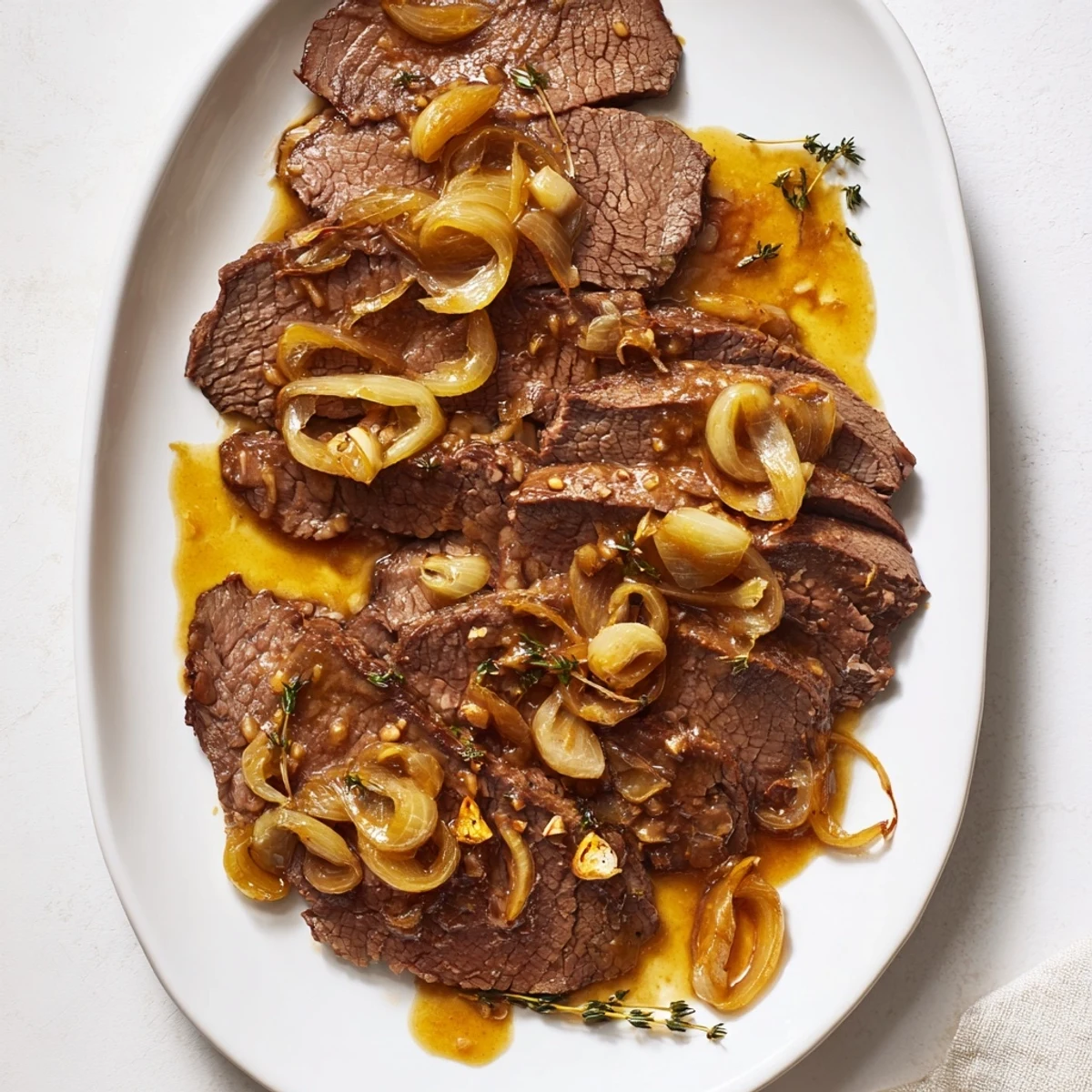
 This dish features a richly flavored beef brisket slowly cooked with layers of caramelized onions, garlic, and fresh herbs. The brisket is first seared to lock in juices, then braised in a savory mixture of red wine and broth, creating a melt-in-your-mouth texture. Aromatic vegetables like carrots and celery add depth to the sauce, which is spooned over slices before serving. Ideal for hearty gatherings, this comforting main course pairs wonderfully with mashed potatoes or roasted vegetables.
I still remember the first time my grandmother let me watch her make braised brisket. The kitchen filled with this deep, savory aroma as the beef turned mahogany brown in the Dutch oven, and I was mesmerized by how something so tough could become so tender. Years later, I realized that long, slow braise wasn't just cooking—it was patience transformed into comfort on a plate. Now, whenever I make this dish, I'm transported back to that warm kitchen, and I want to share that same magic with everyone I cook for.
I made this for my husband's birthday dinner last winter, and he sat there in silence for a moment after the first bite. That's when I knew I'd gotten it right—not because of fancy technique, but because I'd slowed down enough to let the beef and onions have a real conversation in that pot.
Ingredients
- Beef brisket, 4 lbs: This is your star. Look for a piece with some fat marbling—that's where the flavor lives. Trim the excess, but leave a thin layer on top to keep everything moist and rich during the long braise.
- Kosher salt and black pepper: Don't skip the salt. It's not just seasoning; it draws out the meat's own juices and makes everything taste more like itself.
- Yellow onions, 3 large: Slice them thin and let them caramelize slowly. This is where the magic happens—they'll transform into the foundation of your sauce.
- Garlic, 4 cloves: Mince it fine so it melts into the sauce without any harsh notes.
- Carrots and celery: These add sweetness and body to the braising liquid. Don't skip them, even though you might think they're just supporting players.
- Beef broth, 2 cups: Use good broth. I learned this the hard way—cheap broth makes cheap-tasting sauce.
- Dry red wine, 1 cup: Something you'd actually drink. The wine becomes part of the soul of this dish.
- Tomato paste, 2 tbsp: This adds umami depth and helps build the sauce's body.
- Worcestershire sauce, 2 tbsp: The secret weapon. It adds complexity without being obvious about it.
- Fresh thyme and rosemary: These herbs need to be fresh. Dried herbs turn woody in long braises.
- Bay leaves and olive oil: Two bay leaves are enough—too many and they take over. Use good olive oil for searing; it matters more than people think.
Instructions
- Prepare and sear:
- Start by patting your brisket completely dry with paper towels—this is how you get that gorgeous brown crust. Season every side generously with salt and pepper, then let the oven preheat to 325°F while you get your Dutch oven hot with olive oil. When the oil is shimmering and almost smoking, place the brisket in carefully. Don't move it. Let it sit there for 4 to 5 minutes until you hear it release from the bottom with a satisfying sound, then flip and repeat on the other side. Transfer the meat to a plate and breathe in that caramelized beef aroma—you're already winning.
- Build the flavor base:
- Lower the heat to medium and add your sliced onions to the same pot. This is where patience pays off—let them cook and stir for a full 10 minutes, maybe even a little longer. You're looking for them to turn golden and soft, almost translucent at the edges. Add your sliced carrots and celery now, stir everything together, then add the minced garlic and cook just until it's fragrant, about a minute.
- Deglaze and build the braising liquid:
- Stir in your tomato paste and let it cook for a couple of minutes—this deepens the color and flavor. Pour in your red wine slowly while scraping the bottom of the pot with a wooden spoon. You're lifting up all those browned bits that stuck to the pan; that's pure flavor you don't want to leave behind. Add your beef broth and Worcestershire sauce, give it a stir, and let it simmer for a minute. Taste it—it should taste rich and savory.
- Braise low and slow:
- Nestle your brisket back into the pot, fat side up. Tuck your thyme sprigs, rosemary sprigs, and bay leaves around it. Cover with a tight-fitting lid and transfer the whole pot to your 325°F oven. Now you wait. Resist the urge to open the lid and peek. After 2 and a half to 3 hours, test it with a fork—the meat should give no resistance, almost falling apart.
- Rest and finish:
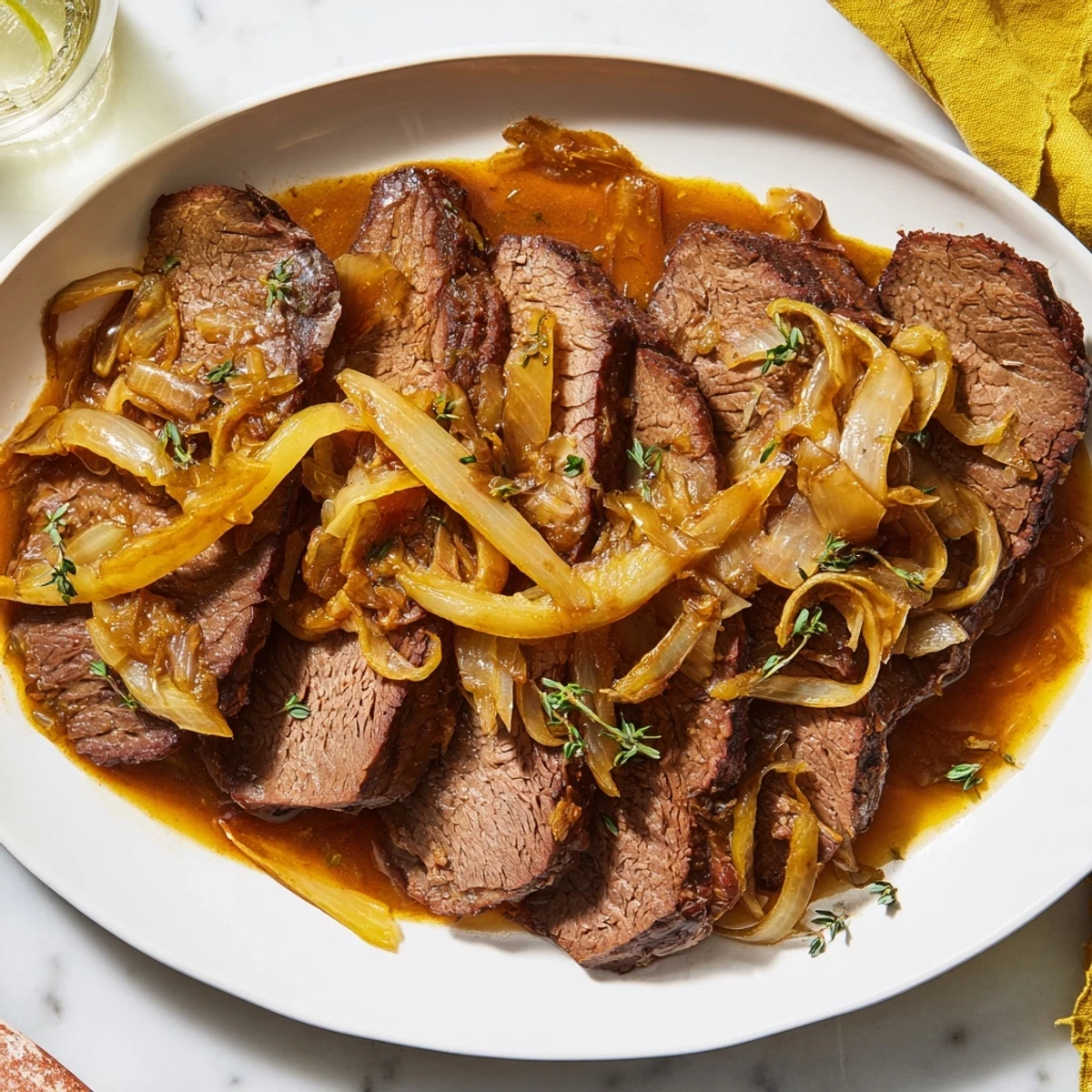
- Remove the brisket to a cutting board and let it rest for 10 minutes. This isn't just waiting; it's allowing the fibers to relax so the meat stays juicy when you cut it. While it rests, skim the excess fat from the sauce, fish out the herb stems and bay leaves, and taste the sauce. It should coat the back of a spoon and taste like something you'd drink from a cup. Slice the brisket against the grain—notice how tender it's become—and arrange it on a platter, then spoon that glossy onion sauce generously over the top.
 Pin This
 My mother told me once that food tastes better when someone has taken their time with it, and braised brisket is proof of that philosophy. The long hours in the oven transform a humble cut of beef into something that feels like an embrace on a plate.
Why This Braise Works
Braising is one of cooking's great acts of alchemy. The low temperature and humid environment of the covered pot break down the tough collagen in brisket into gelatin, which is what makes the meat tender and gives the sauce its silky body. The caramelized onions add natural sweetness that balances the savory beef and wine, while the tomato paste and Worcestershire sauce provide umami—that fifth taste that makes everything taste more like itself. It's not magic; it's chemistry and time working together.
Make-Ahead and Storage
One of the best-kept secrets about braised brisket is that it tastes even better the next day. The flavors have time to meld and deepen, and the meat firms up just enough to slice cleanly. Make it one day ahead, cool it completely, then refrigerate it in its sauce. The fat will solidify on top, making it easy to lift off if you want a lighter dish, or you can leave it for extra richness. Reheat gently in a 300°F oven, covered, until it's warmed through. Leftovers keep for up to four days and make extraordinary sandwiches on crusty bread with a little of that sauce spooned on top.
What to Serve Alongside
Braised brisket is generous and wants to share the plate with sides that complement rather than compete. Creamy mashed potatoes are the classic choice—they catch all that silky sauce and become part of the magic. Egg noodles work beautifully too, especially if you toss them with a little of the sauce. Roasted root vegetables add earthiness and color, while something simple like crusty bread or buttered polenta grounds the richness.
- If you're in a mood for something lighter, serve with a simple green salad dressed with lemon juice—the acidity cuts through the richness perfectly.
- Don't overlook steamed greens like spinach or kale—they provide contrast and make the plate feel balanced.
- A small glass of the same red wine you cooked with is the perfect companion to this meal.
 Pin This
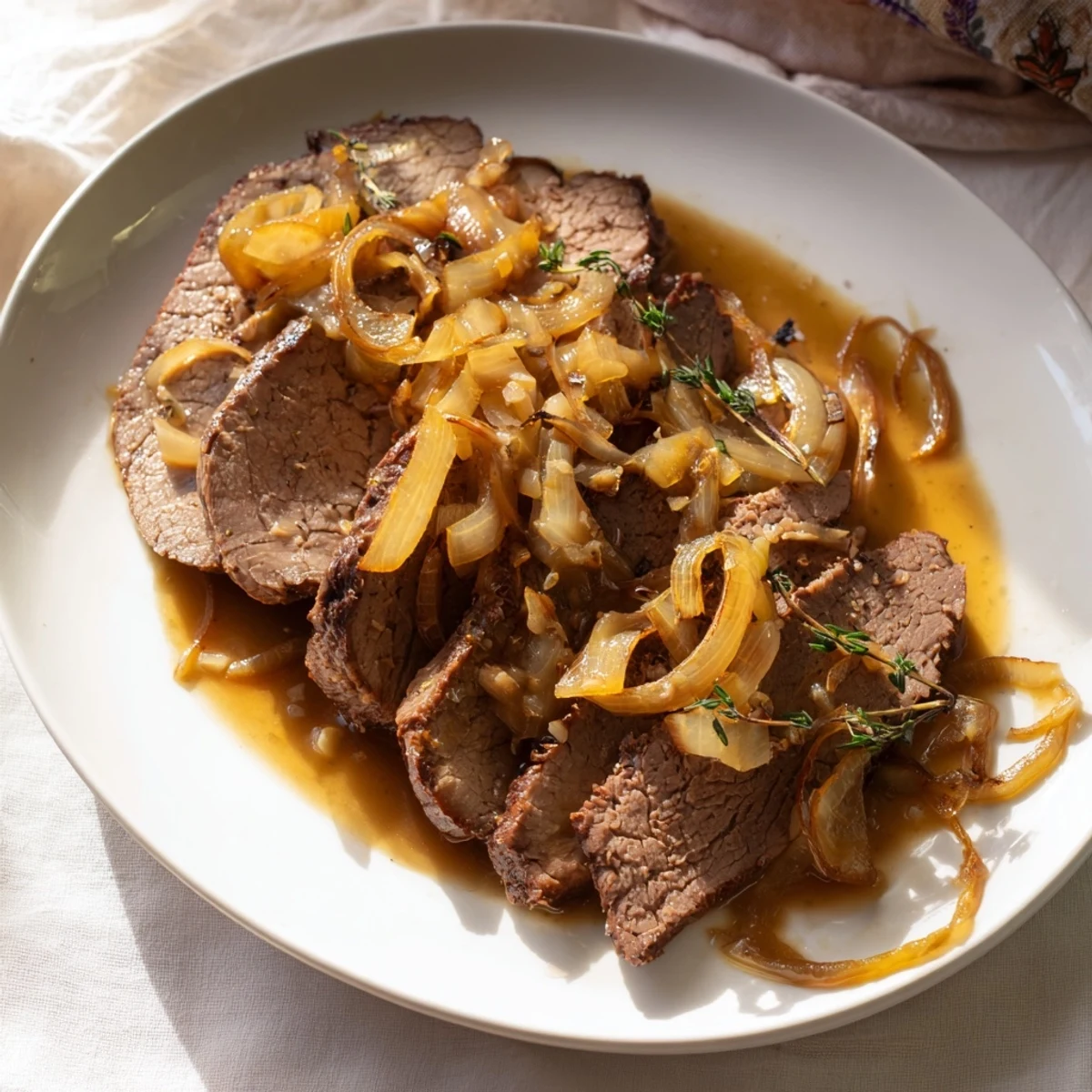
 Braised brisket is the kind of dish that reminds you why you cook. It's humble, forgiving, and absolutely delicious.
Recipe FAQs
- → How do I ensure the brisket is tender?
-
Slow braising at a low temperature for 2½ to 3 hours breaks down connective tissue, making the brisket fork-tender.
- → Can I prepare this dish in advance?
-
Yes, chilling overnight allows flavors to meld. Reheat gently before serving for best results.
- → What sides complement this dish well?
-
Mashed potatoes, roasted vegetables, or crusty bread provide excellent accompaniments to soak up the flavorful sauce.
- → How is the onion sauce made?
-
Onions, carrots, and celery are caramelized, then simmered with garlic, tomato paste, red wine, and broth, creating a rich sauce infused with herbs.
- → Are there any tips for seasoning?
-
Season the brisket thoroughly with kosher salt and black pepper before searing to enhance flavor throughout.