
 Pin This
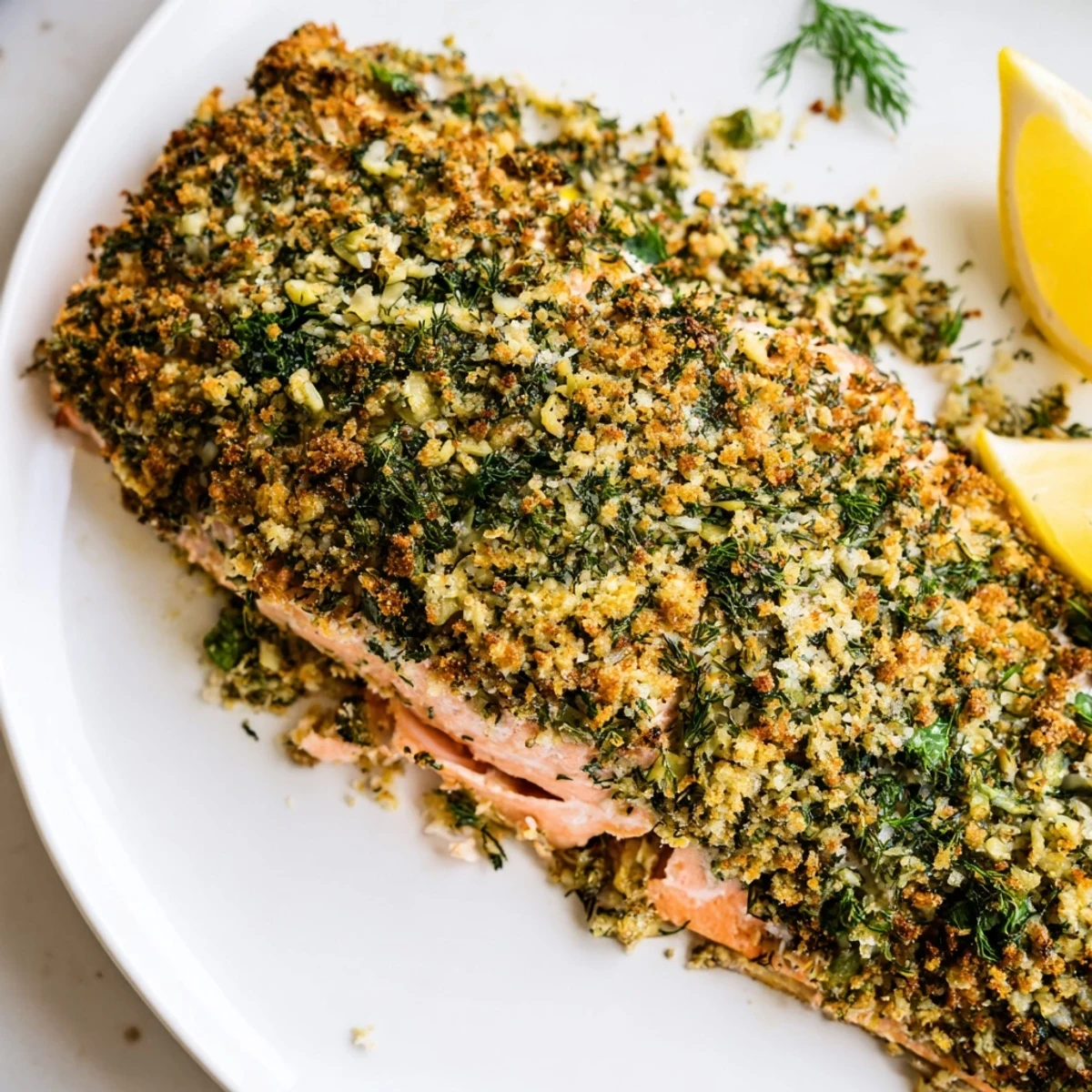
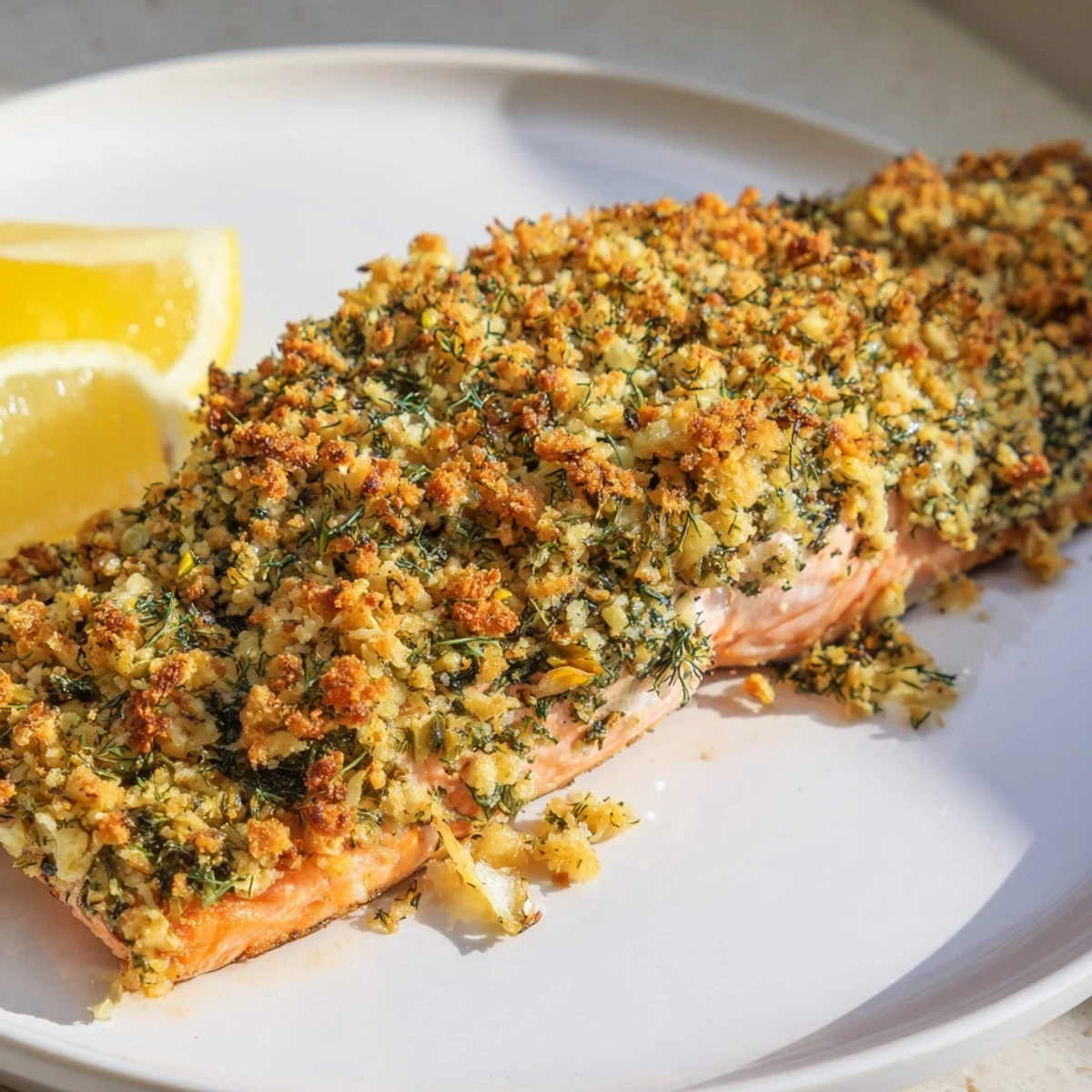
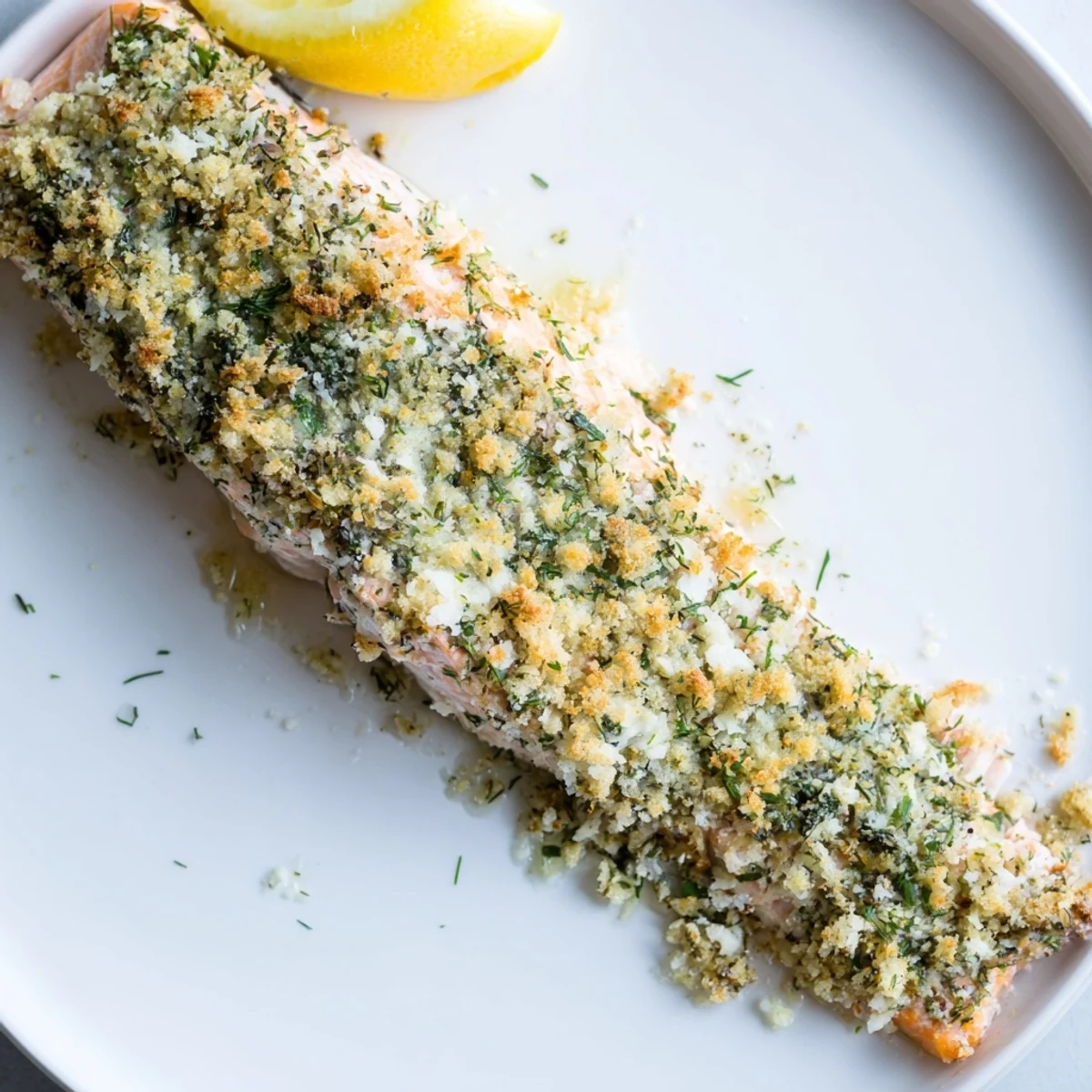
 This dish features salmon fillets coated in a vibrant mixture of fresh breadcrumbs, parsley, dill, lemon zest, garlic, and Parmesan cheese. Brushed with Dijon mustard and baked until the crust turns golden, it offers a crisp texture that complements the tender, flaky fish inside. Ready in just 30 minutes, it pairs beautifully with lemon wedges and makes a delightful main course for pescatarian menus.
There's something about the sound of salmon hitting a hot pan that signals good things ahead, but I stumbled onto this crusted version by accident one weeknight when I'd picked up beautiful fillets and had a nearly stale baguette lingering on the counter. That happy collision of ingredients—the bright herbs, the way Dijon mustard acts like edible glue, the golden crust that shatters when you fork into it—turned into something I now reach for whenever I want dinner to feel both effortless and special.
I made this for my sister's boyfriend the first time he came to dinner, and I remember standing in the kitchen genuinely nervous—not about the recipe, but about seeming like I was trying too hard. When he took that first bite and just went quiet for a second, then asked for the recipe, something clicked: this dish has a quiet confidence that speaks for itself.
Ingredients
- Salmon fillets: Look for ones that feel firm and smell like the ocean, not fishy; skinless saves you a step and lets the crust shine.
- Fresh breadcrumbs: Day-old bread torn by hand gives you better texture than panko, though panko works if that's what you have.
- Fresh parsley and dill: These two are non-negotiable; they brighten everything and transform the crust from plain to intentional.
- Lemon zest: A microplane makes this effortless and gets you the flavor without the bitterness of the white pith.
- Garlic: Minced fine so it distributes evenly and doesn't leave you with sharp bites of raw garlic.
- Parmesan cheese: Freshly grated holds onto moisture better than pre-grated, which keeps your crust from drying out.
- Olive oil: This binds the crumbs together and helps them turn golden; don't skip it or get stingy.
- Dijon mustard: The secret weapon that acts as both seasoning and adhesive, keeping your crust locked onto the fish.
Instructions
- Get everything ready:
- Preheat your oven to 200°C and line a baking sheet with parchment paper. This takes two minutes but saves you from salmon sticking and makes cleanup almost laughable.
- Build your crust:
- In a bowl, toss together breadcrumbs, parsley, dill, lemon zest, minced garlic, Parmesan, olive oil, salt, and pepper until the mixture looks like wet sand—each crumb should glisten slightly. Taste a tiny pinch; you want it seasoned enough that it tastes good on its own.
- Dry and arrange the salmon:
- Pat each fillet dry with paper towels; moisture is the enemy of a crispy crust. Lay them on the prepared sheet with a little breathing room between them.
- Apply the mustard base:
- Brush each fillet generously with Dijon mustard, covering the top surface completely. This is your glue and your subtle flavor layer.
- Press on the crust:
- Pile the breadcrumb mixture onto each fillet and press down gently but firmly with the back of a spoon, creating an even layer that will bake into a cohesive crust rather than falling off into the pan.
- Bake until golden:
- Slide into the oven for 12 to 15 minutes, watching until the crust turns deep golden brown and the flesh at the thickest part of the fillet feels just barely firm when you press it gently. The internal temp should hit 52–55°C for that sweet spot between cooked and tender.
- Finish and serve:
- Plate while everything is still warm, squeeze fresh lemon over the top, and serve immediately alongside the lemon wedges for anyone who wants extra brightness.
 Pin This
 A friend once told me that good cooking is mostly about paying attention, and this recipe proved it: I was watching the crust carefully one evening when the kitchen filled with this toasted herb smell that made everyone drift toward the oven like it was a magnet. That moment, when food smells so good it pulls people together before they've even eaten, is when I knew this recipe had staying power.
Making It Your Own
The beauty of this crust is that it's genuinely flexible without losing its charm. I've swapped dill for tarragon when I had it, added chopped chives for a sharper note, and once crumbled in some toasted almonds for texture. The framework stays solid; it's the little variations that let you make it feel like your own invention.
Timing and Temperature Notes
Everyone worries about overcooking salmon, and that anxiety is half of why this method works so well. The gentle oven heat and the insulating breadcrumb layer mean you can actually relax—watch the crust color, trust your oven, and aim for that internal temperature rather than guessing. Undercooked salmon tastes soft and metallic; perfectly cooked tastes buttery and clean.
Serving Suggestions
This dish doesn't ask for much, but it does respond well to thoughtful partners on the plate. A sharp green salad cuts through the richness, or roasted vegetables—especially asparagus or broccoli—turn it into something that feels like actual dinner instead of just a protein. Cold white wine nearby completes the picture.
- A squeeze of lemon wedge right before eating brightens everything and cuts through any richness.
- Leftovers are genuinely good cold the next day, flaked over salad or tucked into grain bowls.
- If your salmon is particularly thick, give it an extra couple of minutes; if it's thin, watch the crust color to avoid overdrying the fish.
 Pin This
 This salmon hits that rare note of feeling both comforting and a little bit celebratory, the kind of dinner that works equally well for a quiet Tuesday or when people matter enough to cook for. Once you make it, you'll find yourself reaching for it again and again.
Recipe FAQs
- → What type of fish is best for this dish?
-
Skinless, pin-boned salmon fillets around 150 grams each work best for even cooking and easy crust adhesion.
- → Can I use gluten-free breadcrumbs?
-
Yes, substituting gluten-free breadcrumbs is a great option for those with gluten sensitivities, maintaining the crust’s texture.
- → How can I ensure the crust stays crispy?
-
Press the breadcrumb mixture firmly onto the mustard-coated fillets and bake at a high temperature to achieve a golden, crunchy topping.
- → What herbs complement the crust mixture?
-
Fresh parsley and dill provide a bright, aromatic flavor, but adding chives or tarragon can offer a unique twist.
- → What sides pair well with this salmon preparation?
-
Light sides such as crisp green salads or roasted vegetables enhance the dish’s balance and freshness.