
 Pin This
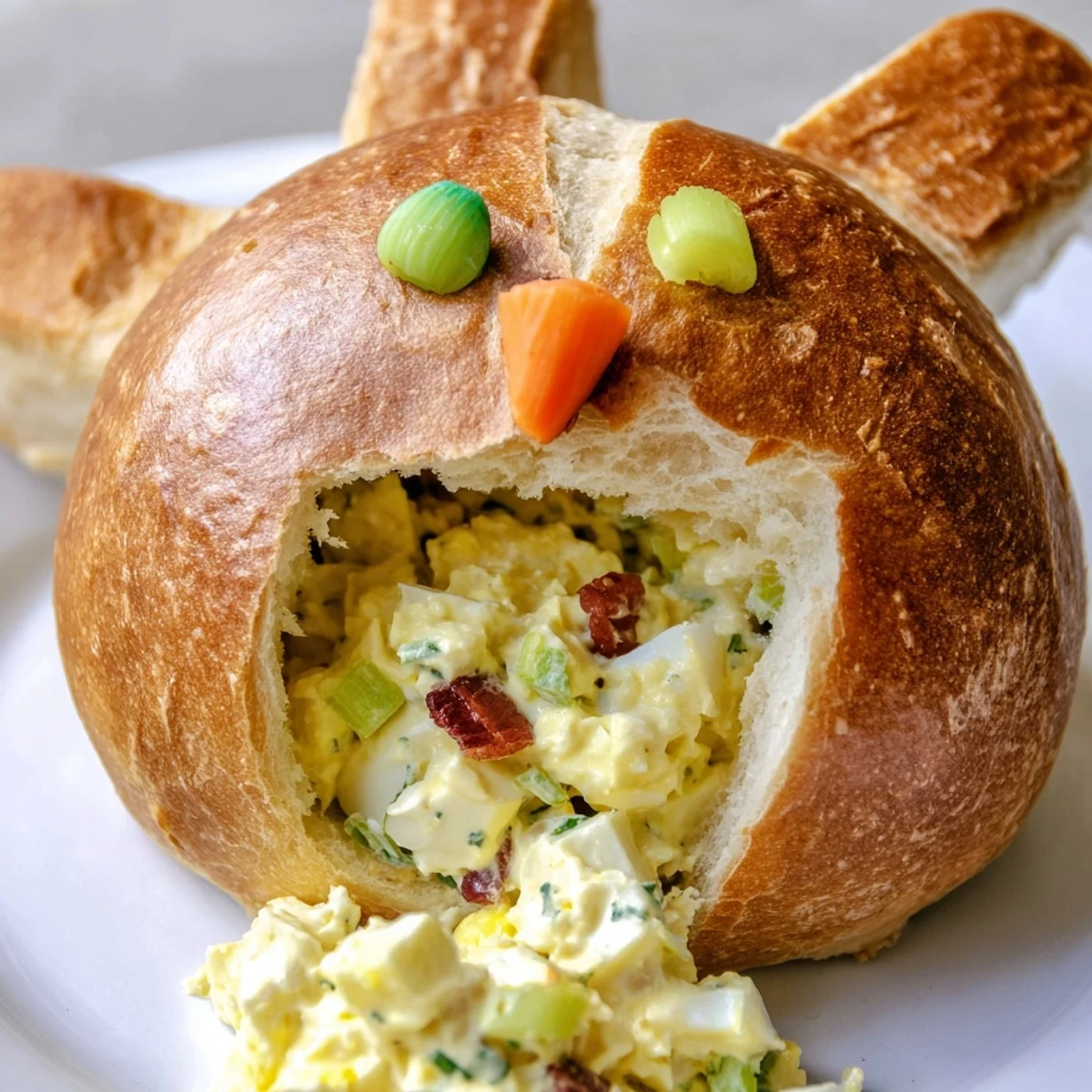
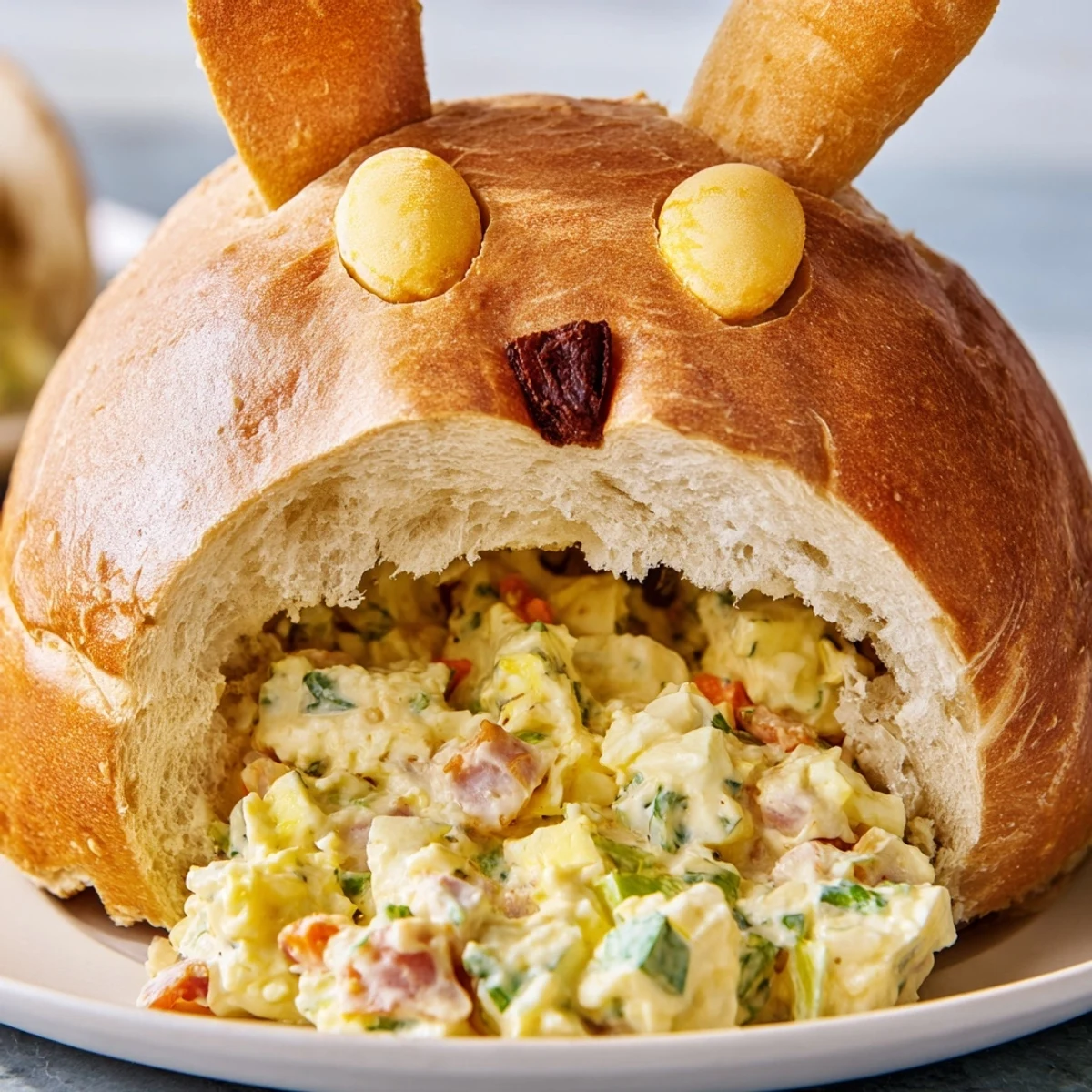
 This whimsical Easter centerpiece transforms a classic cob loaf into an adorable bunny shape, hollowed out and filled with a velvety egg salad. The bread becomes golden and slightly crisp after baking, providing the perfect vessel for the creamy, well-seasoned filling. Each serving delivers a satisfying combination of textures—crunchy exterior, soft interior bread, and smooth egg salad with hints of Dijon mustard and fresh chives.
Ideal for holiday brunches, this impressive dish serves eight and brings both visual charm and comforting flavors to your spring table. The assembly is straightforward: shape your bunny, bake until golden, prepare the classic egg salad, and combine just before serving for the best texture.
My daughter spotted this idea in a magazine at age seven and would not let it go. We spent a drizzly Saturday afternoon covered in flour, attaching bread rolls with toothpicks and giggling every time the bunny ears fell over. Now it is not Easter Sunday without this cheerful bread bunny staring at us from the brunch table.
Last year my brother in law pretended the bunny was judging his egg salad technique. We laughed so hard trying to get the raisin eyes straight that we almost forgot to put it in the oven. That is exactly the kind of memory this recipe creates.
Ingredients
- Large round cob loaf: Choose one with a thick sturdy crust that will hold its shape when hollowed out and baked
- Small bread roll for head: A standard dinner roll size works perfectly for the bunny face
- Two small rolls for feet: These give your bunny a sitting posture and add structural stability
- Breadstick for ears: Check the bakery section for thin crispy breadsticks that cut cleanly
- Raisins or black olives: Raisins are sweeter while olives add a savory contrast
- Baby carrot: Look for genuine baby carrots not cut pieces for the perfect nose size
- Fresh parsley or chives: These create whiskers that actually stay in place
- Beaten egg: This gives your bunny a beautiful golden brown finish
- Large eggs: Room temperature eggs peel more easily after boiling
- Mayonnaise and sour cream: This combination makes the filling rich without being heavy
- Dijon mustard: Adds just enough sharpness to cut through the creaminess
- Fresh chives: Their mild onion flavor complements eggs perfectly
- Celery: Finely diced provides essential crunch in every bite
- Cooked bacon: Optional but adds smoky depth vegetarians can skip
Instructions
- Prepare your oven and workspace:
- Preheat oven to 180°C (350°F) and line a large baking tray with parchment paper so nothing sticks
- Hollow out the bunny body:
- Slice off the top of your cob loaf and scoop out the soft inside leaving a 2 cm shell. Save those bread chunks for dipping later
- Build your bunny:
- Place the cob on your prepared tray. Use toothpicks to attach the head roll to the front top and position the two feet rolls at the base
- Add those signature ears:
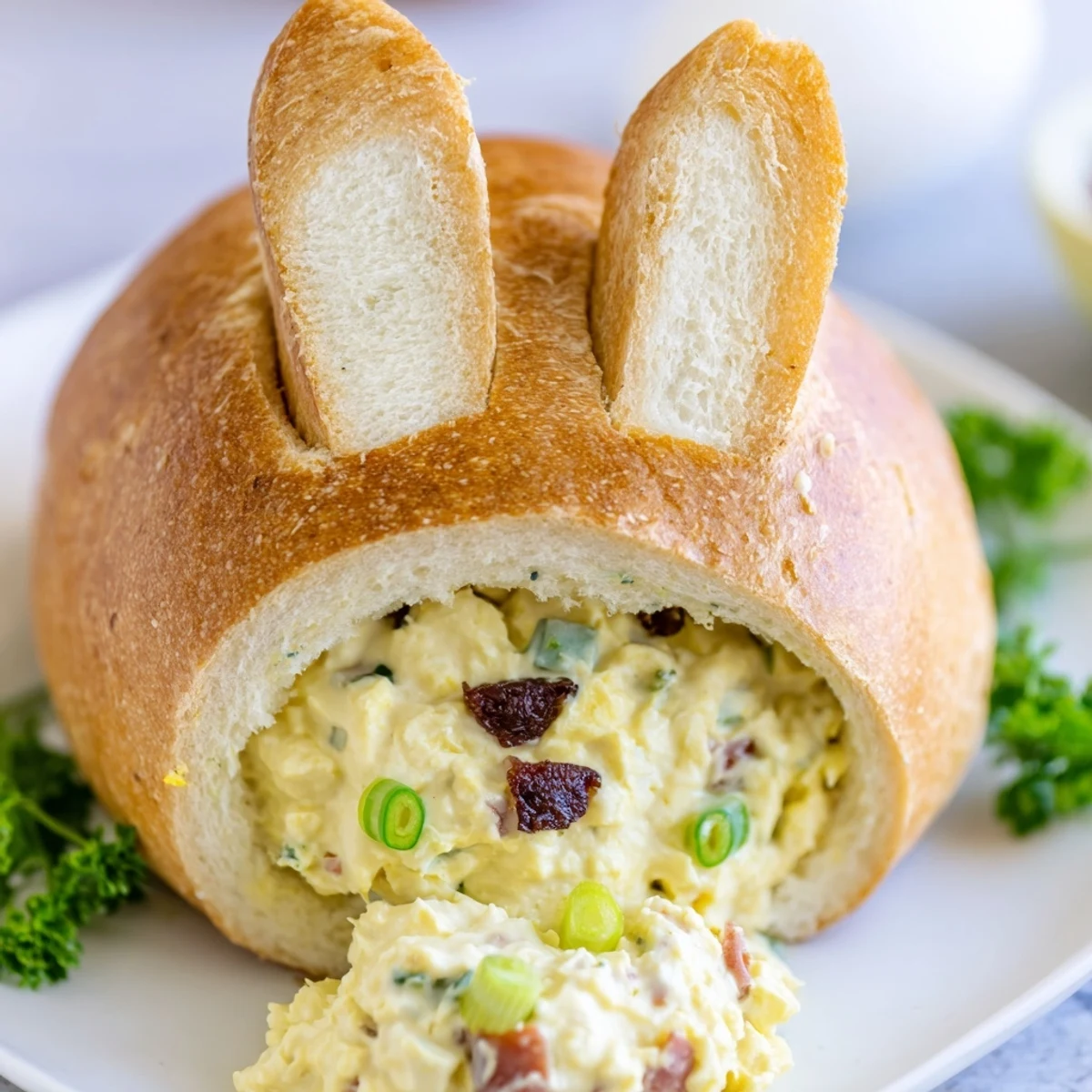
- Cut the breadstick in half and insert the cut ends behind the head at a slight angle
- Create the face:
- Press raisins or olives into the head roll for eyes. Gently push the baby carrot in for a nose and tuck small herb sprigs around for whiskers
- Give it a golden glow:
- Brush every exposed bread surface with beaten egg including the ears and face details
- Bake until golden:
- Bake for 12 to 15 minutes until the bread is lightly golden and feels set to the touch. Let it cool slightly before filling
- Prepare perfect hard boiled eggs:
- Boil eggs for exactly 10 minutes then plunge into cold water. The shells will slip right off
- Mix the creamy filling:
- Coarsely chop those peeled eggs and fold them with mayonnaise sour cream mustard chives salt pepper celery and bacon until everything is evenly distributed
- Bring your bunny to life:
- Spoon the egg salad into the hollowed cob right before serving. Surround your bunny with the reserved bread pieces for dipping
 Pin This
 This silly bread bunny has become the anchor of our Easter celebration. Even my teenagers who pretend to be too cool for everything admit it would not feel like Easter without him watching over the table.
Making Ahead
You can assemble the entire bunny structure the night before and store it covered at room temperature. Bake it fresh in the morning for that irresistible aroma. The egg salad actually tastes better made a day ahead so the flavors meld together beautifully.
Serving Suggestions
Set up your bunny as the centerpiece on a bed of fresh greens or edible flowers. Surround it with additional crudités and crackers for variety. The contrast between the warm crusty bread and cool creamy filling is absolute perfection.
Getting Creative
Swap chicken or tuna salad for the egg filling if you prefer. Try different herb combinations like dill and tarragon for a fresh spring flavor. You can even brush the baked bread with garlic butter for extra savory depth.
- Cheese lovers can fold shredded cheddar into the filling
- Add a dash of hot sauce if your family likes some heat
- Mini bunnies make adorable individual servings
 Pin This
 This recipe proves that food does not have to be fancy to be memorable. Sometimes the silliest presentation creates the most lasting traditions.
Recipe FAQs
- → Can I make this ahead of time?
-
Prepare the bunny bread shape and bake up to a day in advance. Store the egg salad separately and fill the cob just before serving to prevent the bread from becoming soggy.
- → What can I use instead of bacon?
-
Omit bacon for a vegetarian version, or substitute with finely diced pickles, capers, or smoked salmon for a pescatarian twist that adds savory depth.
- → How do I attach the bread pieces securely?
-
Use toothpicks to secure the head, feet, and ears to the main cob loaf. Just remember to remove them before serving, or warn your guests about their placement.
- → Can I use different bread types?
-
Any sturdy round loaf works well—sourdough, rye, or herb breads add wonderful flavor. Softer breads may not hold the shape as well when hollowed out.
- → How long will leftovers keep?
-
The filled cob is best enjoyed immediately. Store leftover egg salad in an airtight container for up to 2 days. Reserve bread pieces can be frozen for later use as croutons.