
 Pin This
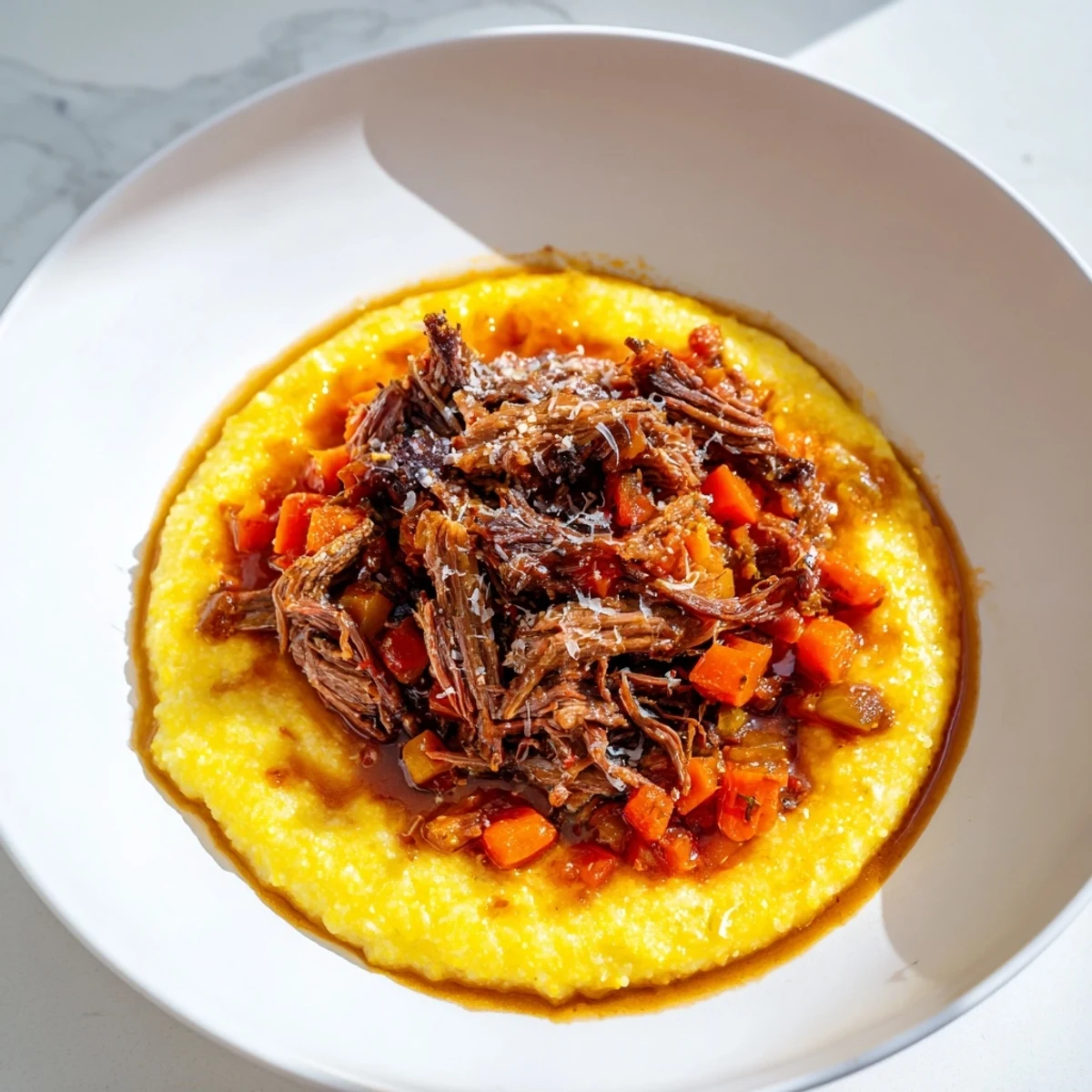
 This Italian classic combines slow-braised beef chuck in a rich tomato and wine sauce with smooth, buttery polenta. The beef becomes fork-tender after hours in the oven, while the cornmeal simmers with milk and Parmesan. It is an ideal dish for cozy evenings, offering deep savory flavors and a luxurious texture.
My first attempt at polenta was a disaster—I thought I could just dump cornmeal into boiling water and walk away, only to return to a scorched, lumpy mess stuck to the bottom of the pot. Years later, when a friend served me her creamy polenta topped with this rich beef ragu, something clicked. The silky corn beneath that deep, wine-soaked meat sauce reminded me that some dishes demand patience and attention, and that's precisely what makes them worth the effort.
I served this to my parents on a cold Sunday when they were visiting, and my dad actually put his fork down between bites to tell me it tasted like something he'd eaten in Rome decades ago. Watching him get lost in that memory, swirling polenta on his spoon, made me understand why people cook these kinds of meals—it's not really about feeding hunger, it's about creating a moment.
Ingredients
- Beef chuck: Don't skip the marbling in this cut—it's what breaks down into silky, rich ragu after hours of braising, not the lean cuts that end up stringy.
- Olive oil: Use a decent quality for browning; it affects the depth of flavor in ways you'll taste in the finished sauce.
- Onion, carrots, celery: This is your flavor foundation, the holy trinity that teaches beef to taste like itself only better.
- Tomato paste: Two tablespoons concentrate the umami—don't dilute this by skipping it or using less.
- Dry red wine: A wine you'd actually drink makes a sauce worth eating; use something you like, not cooking wine.
- Crushed tomatoes: The backbone of the ragu, giving it body and subtle sweetness that plays against the beef.
- Fresh thyme and bay leaf: These small additions do big work, perfuming the braise without shouting.
- Beef stock: Homemade is ideal, but good store-bought will carry you through.
- Polenta: Buy coarse cornmeal labeled polenta, not instant—the texture difference is enormous.
- Whole milk: This is what transforms polenta from stiff to cloud-like, so don't substitute with water.
- Unsalted butter: The secret to that velvety finish, whisked in at the end to make polenta taste like butter masquerading as corn.
- Parmigiano-Reggiano: Real aged cheese adds a sharp, crystalline note that cheap parmesan simply cannot.
Instructions
- Get your Dutch oven ready:
- Set your oven to 325°F and place a heavy-bottomed Dutch oven on the stove over medium-high heat. This low temperature will coax the beef into tenderness without toughening it.
- Brown the beef:
- Pat your beef cubes dry and season generously with salt and pepper. When the oil shimmers, work in batches—crowding the pot makes meat steam instead of sear, and you want that deep golden crust for flavor. Listen for the sizzle and resist the urge to move things around; let them sit undisturbed for a couple of minutes on each side.
- Build the base:
- Toss in your chopped onion, carrots, and celery, and let them soften for 6 to 8 minutes, stirring occasionally. The kitchen will smell incredible. Add the garlic and tomato paste, stirring constantly for just a minute until everything smells even more fragrant and the paste darkens slightly.
- Deglaze and simmer:
- Pour in your red wine, scraping the bottom of the pot with a wooden spoon to lift all those caramelized bits—that's pure flavor. Let it bubble away for 2 to 3 minutes, concentrating slightly.
- Build the braise:
- Add the crushed tomatoes, thyme sprigs, bay leaf, and beef stock. Return the browned beef and any accumulated juices to the pot, stirring everything together until the meat nestles into the sauce.
- Braise low and slow:
- Bring everything to a gentle simmer on the stovetop, then cover and slide into the oven. After 2 to 2.5 hours, the beef should shred easily under a fork and the sauce will have darkened and deepened. Remove the thyme sprigs and bay leaf, then use two forks to shred the meat directly in the pot, mixing it back into the sauce.
- Start your polenta:
- While the beef braises, bring 4 cups of salted water to a rolling boil in a large saucepan. This is the moment to add salt—polenta is a vehicle for flavor and needs seasoning from the start.
- Add the cornmeal carefully:
- Whisk the polenta in slowly, a handful at a time, to prevent lumps from forming. The mixture will bubble and pop like a gentle volcano, so keep stirring and be patient. Reduce the heat to low once it's mostly incorporated.
- Stir and wait:
- For the next 25 to 30 minutes, whisk frequently—every few minutes, at minimum. This isn't busywork; you're preventing the bottom from scorching and developing the creamy texture. The polenta will thicken, bubble less violently, and gradually transform into something silky.
- Finish with richness:
- When the polenta is thick and creamy, stir in the milk, butter, and Parmigiano-Reggiano. Taste and adjust salt. The polenta should taste luxurious, almost indulgent.
- Serve and celebrate:
- Spoon creamy polenta into bowls, top generously with your braised beef ragu, and finish with extra cheese and fresh parsley if you like the color and brightness.
 Pin This
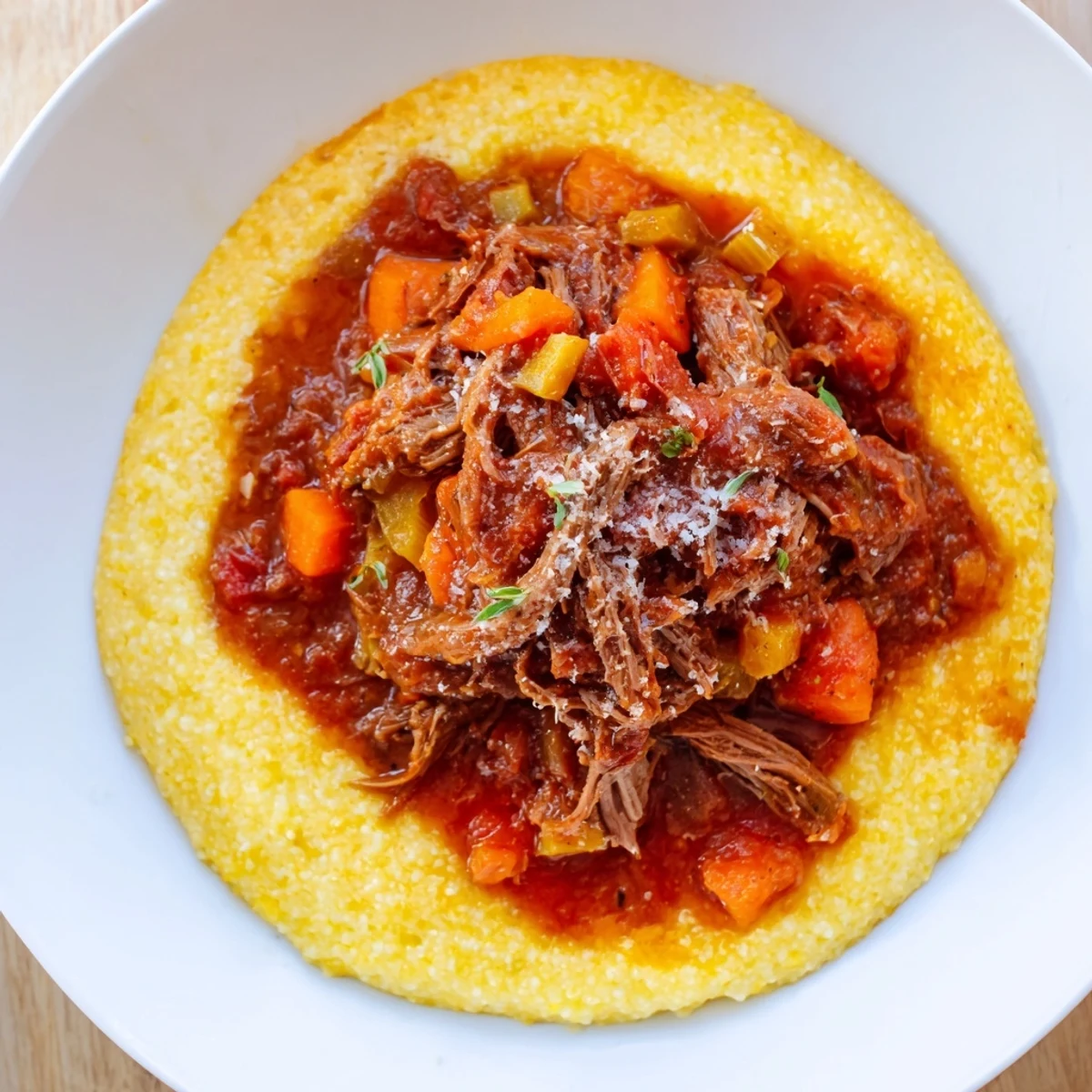
 There's a magic moment in cooking when everything converges—when you ladle that silky polenta into a bowl, spoon the wine-dark ragu on top, and watch someone's face as they taste it for the first time. That's what this dish does, and it's why I keep making it.
Why Low and Slow Works Here
Braising at a gentle temperature for hours turns tough beef into something so tender it falls apart under the slightest pressure. The low oven heat allows the collagen in the meat to break down gradually into gelatin, which thickens and enriches the sauce naturally. The tomatoes and wine also have time to mellow into one another, their separate notes blending into something deeper and more complex than their individual flavors suggest.
Polenta Technique and Texture
The constant stirring keeps the cornmeal suspended and prevents it from settling into dense clumps on the bottom. What you're aiming for is a texture that falls gently off the spoon, creamy but still holding its shape—not stiff, not soup. When you add the milk and butter at the end, it transforms from thick to luxurious, coating your mouth with a buttery corn flavor that's impossible to achieve without that final enrichment.
Make It Your Own
This dish has a strong backbone, but it also invites gentle variation. Some cooks add a splash of balsamic vinegar or a tiny pinch of chili flakes to the ragu for complexity, and either choice is worth trying. Pork shoulder can replace the beef if that's what you have or prefer, following the exact same timing and technique. You might even stir in a handful of sautéed mushrooms or a spoonful of Dijon mustard if you're feeling adventurous, though the classic version is perfect as written.
- A robust red wine like Chianti or Barolo pairs beautifully and echoes the flavors in the sauce.
- Make the ragu a day or two ahead; it reheats gently and tastes even better than fresh.
- Polenta can't sit around, so cook it just before serving or it will stiffen as it cools.
 Pin This
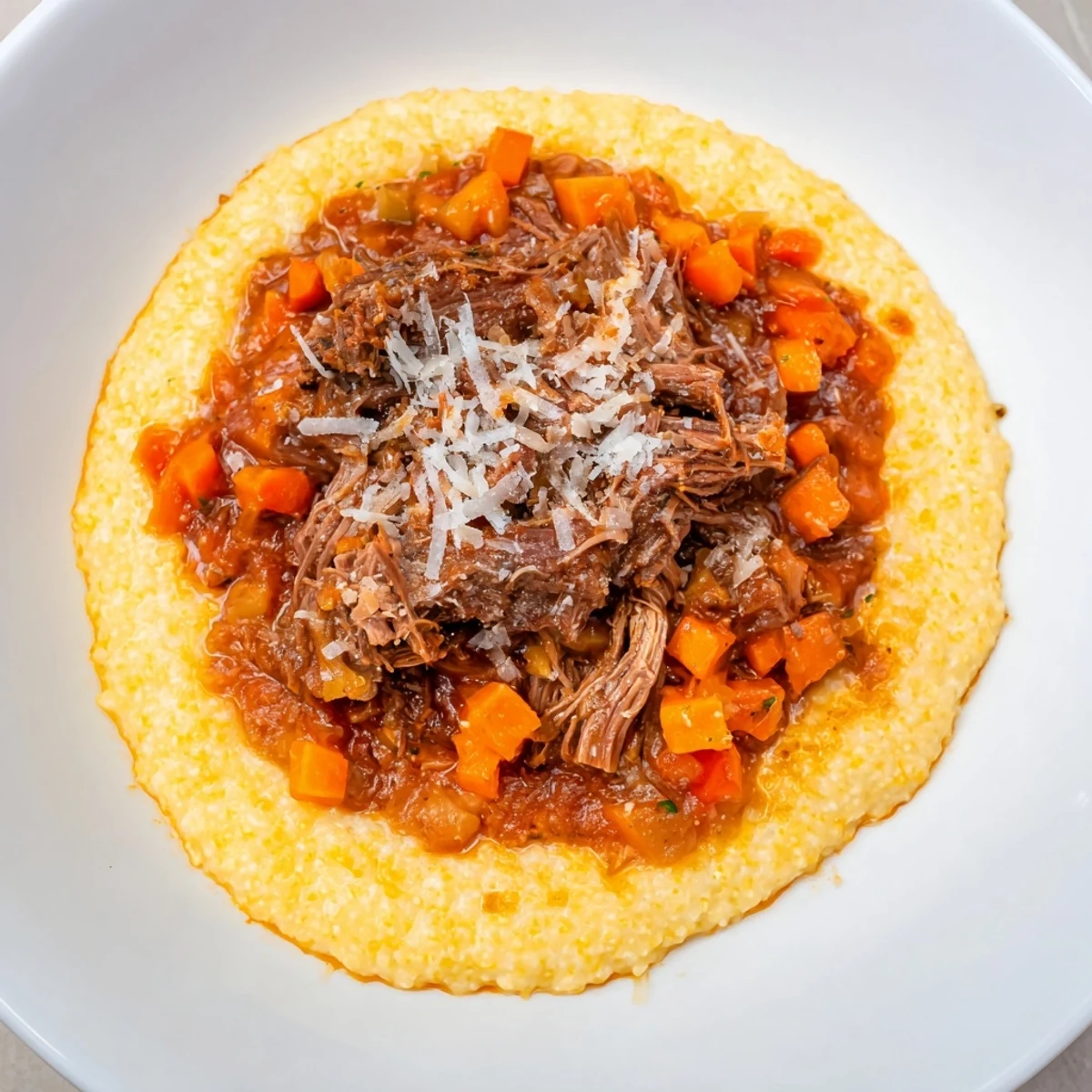
 This is the kind of dish that tastes like effort without being complicated, like you've cooked all day when really the oven did most of the work. Serve it to people you care about and watch what happens.
Recipe FAQs
- → Can I make the ragu ahead of time?
-
Yes, the braised beef ragu actually improves in flavor if made a day ahead. Allow it to cool completely before refrigerating, then reheat gently before serving.
- → What cut of beef is best for braising?
-
Beef chuck is the ideal choice because it contains enough connective tissue to break down during slow cooking, resulting in tender, succulent meat.
- → Can I use instant polenta instead of coarse?
-
While you can substitute instant polenta for a quicker version, coarse cornmeal provides a superior texture and creaminess that holds up better against the rich ragu.
- → Is this dish gluten-free?
-
Yes, provided you use certified gluten-free cornmeal and check that your beef stock and other ingredients do not contain hidden gluten additives.
- → What wine should I use for the sauce?
-
A dry red wine like Chianti, Barolo, or Merlot works best to enhance the depth of the tomato and beef flavors. You can use the same bottle for serving.