
 Pin This
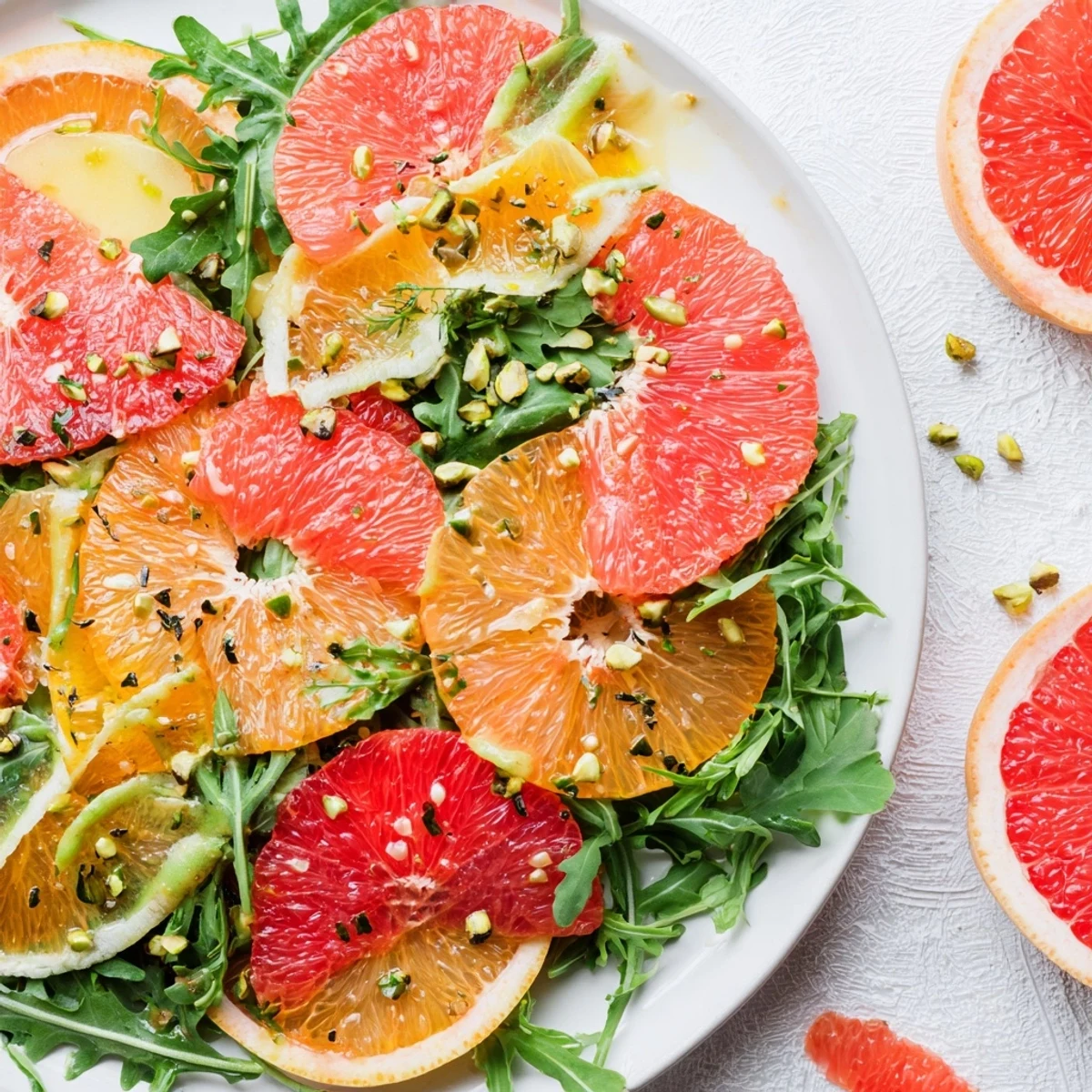
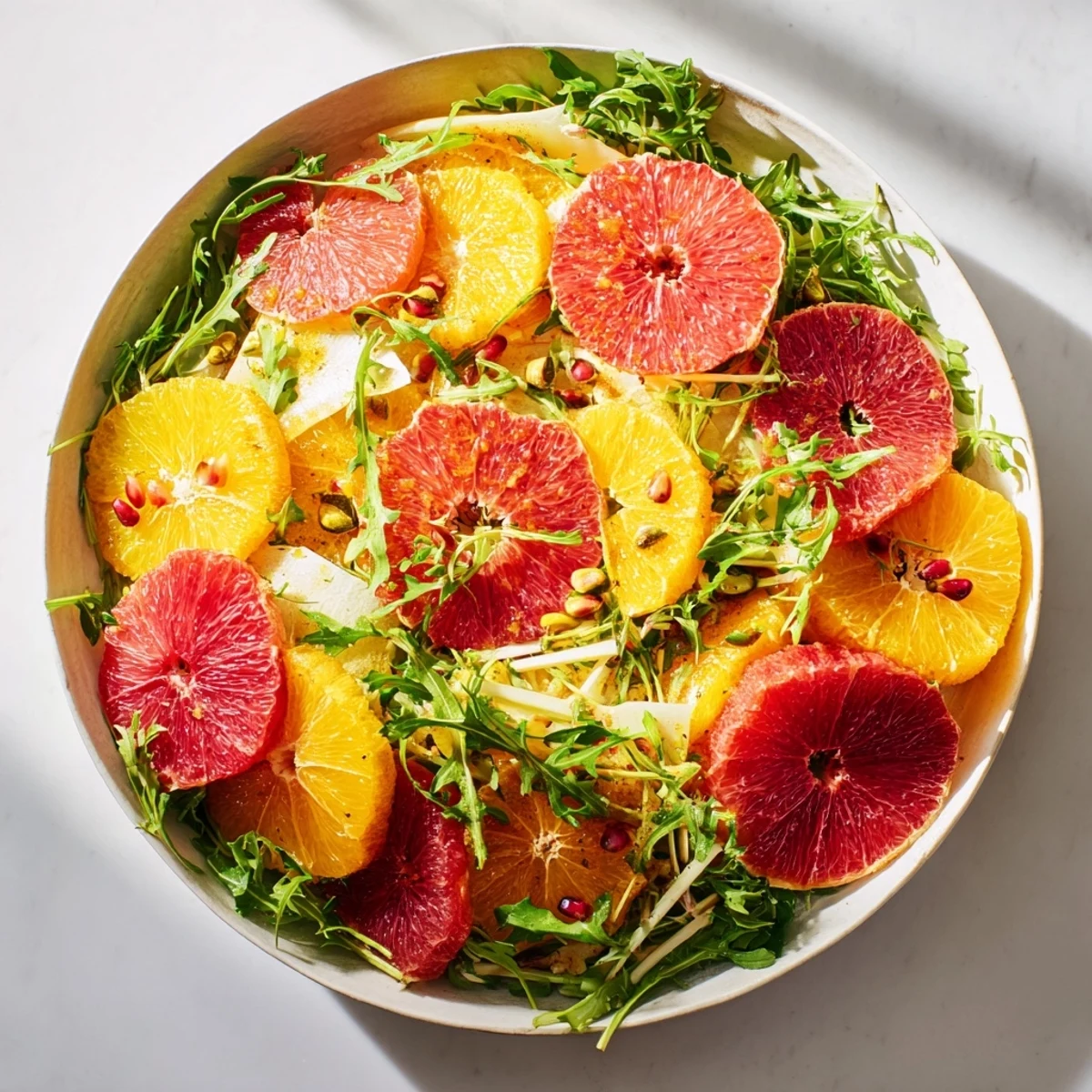
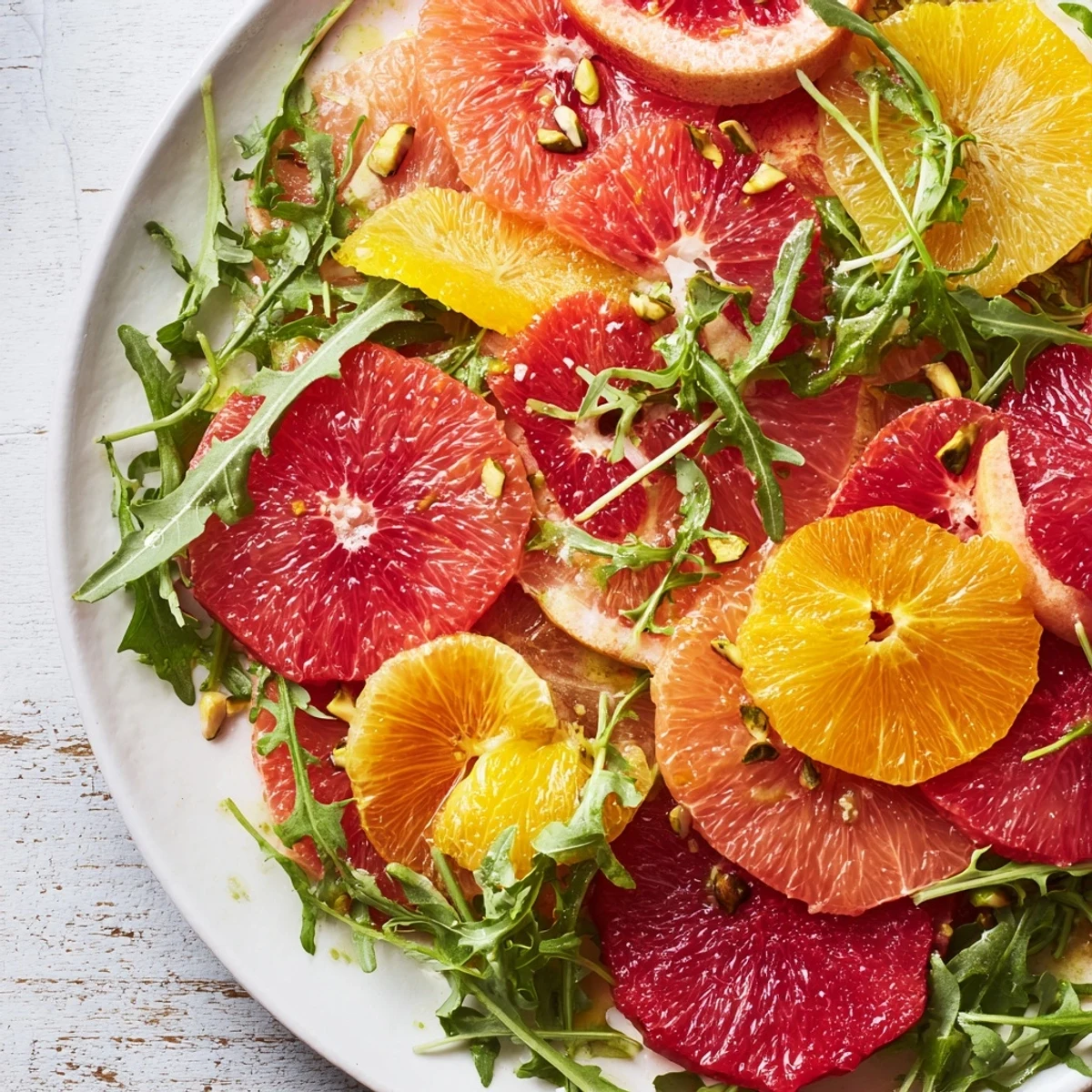
 This vibrant salad combines juicy winter citrus fruits with peppery arugula and crunchy roasted pistachios. The tangy honey vinaigrette balances sweetness and acidity, creating a refreshing dish perfect for chilly days. Thinly sliced fennel and creamy avocado add texture and depth, while pomegranate seeds provide bursts of color and tartness. Easy to prepare and bursting with fresh flavors, this salad complements light mains or stands alone as a bright starter.
I remember the first time I made this salad on a gray January afternoon when I desperately needed something that tasted like summer. My kitchen was cold, the windows fogged, and I'd just come back from the farmers market with an armful of the most beautiful citrus fruits I'd seen all season. Blood oranges, navel oranges, that jewel-toned grapefruit—they practically glowed on my counter. I sliced into them and suddenly my whole kitchen smelled like winter sunshine. That's when I knew this salad would become my antidote to the dark months, something I'd crave and make again and again.
I'll never forget serving this at a dinner party where everyone was feeling the winter blues. One friend took a bite and their whole face changed—suddenly they were talking about citrus groves and Mediterranean beaches. That's when I realized food doesn't just nourish your body; sometimes it feeds your spirit too. Now whenever February feels too long, I make this salad and invite people over.
Ingredients
- Navel oranges (2): These are your reliable friends—sweet, easy to peel, and they hold their juice perfectly. The slices look stunning on a plate, which matters more than you'd think when you're trying to brighten someone's day
- Blood oranges (2): These are the show-offs of the citrus world. Their deep crimson color is what makes people stop and take a second look at your salad. They taste slightly more complex than navel oranges, almost floral
- Pink grapefruit (1 small): This brings a gentle tartness that keeps the salad from feeling too sweet. Segmenting it takes patience, but your hands-on effort is worth the elegant result
- Arugula or mixed salad greens (100g): The peppery bite of arugula is non-negotiable here—it's the backbone that makes all that fruit sing. If you use milder greens, you'll lose something essential
- Fennel bulb (1 small): Slice this paper-thin and it adds a subtle anise note that feels surprisingly sophisticated. It also provides a little crunch that keeps things interesting
- Avocado (1 small): Adds richness and creaminess without heaviness. Wait to slice it until just before serving so it doesn't brown and lose its color
- Pomegranate seeds (40g): These jeweled arils give you bursts of tart-sweet juice and visual drama. They're worth seeking out because they transform the whole presentation
- Roasted pistachios (40g): The nuttiness grounds everything and gives you a textural contrast. Rough chopping matters—you want irregular pieces that feel substantial
- Extra virgin olive oil (2 tbsp): This is where quality actually matters. Use one you'd taste straight, because you'll taste it here
- Honey (1 tbsp): A touch of honey balances the citric acid and brings everything into harmony. It's the secret that makes people ask what's in your dressing
- White wine vinegar or champagne vinegar (1 tbsp): The acidity here is gentle, more sophisticated than regular vinegar. Champagne vinegar especially feels luxurious
- Dijon mustard (1 tsp): This emulsifies the dressing and adds a whisper of complexity. Don't skip it even though it's a small amount
- Salt and freshly ground black pepper: Always taste and adjust—these are your final tweaks that make it yours
Instructions
- Make Your Dressing First:
- In a small bowl, whisk together the olive oil, honey, vinegar, and Dijon mustard. Watch how it comes together—at first it looks separated and doubtful, then suddenly it emulsifies into something silky. Season with salt and pepper. Taste it on a leaf of arugula to make sure it's balanced. This dressing is best when you let it sit for a minute or two, letting the flavors get acquainted
- Prepare Your Canvas:
- Arrange your greens on a large platter, creating a bed that feels abundant and generous. Don't pack them down—let them have room to breathe. This is your foundation
- Layer with Care and Color:
- Now comes the fun part. Arrange the citrus slices in a casual pattern—they don't need to be perfect, just beautiful. Layer the grapefruit segments between the oranges, then scatter the fennel slices across everything. They'll nestle into the greens like little white threads. Now add the avocado slices, placing them where there are gaps
- Add the Jewels:
- Drizzle your dressing evenly over everything, then scatter the pomegranate seeds across the salad. They're little bursts of color and flavor. Finish with the chopped pistachios
- Serve Immediately:
- This salad is best eaten right after you assemble it, while everything is still crisp and the avocado hasn't oxidized. Bring it to the table and watch people's faces light up
 Pin This
 I learned something important making this salad repeatedly: food is often most powerful when it's simple and lets each ingredient shine. There's no cream sauce to hide behind, no complicated technique to master. It's just you, beautiful ingredients, and the time to treat them with respect. That simplicity is actually what makes it elegant.
Variations and Personal Touches
This salad is a wonderful canvas for your own story. Some seasons I add thinly sliced red onion for sharpness, other times I crumble feta cheese over the top for richness and salt. If I'm cooking for someone with a nut allergy, I skip the pistachios and add toasted pumpkin seeds instead—they provide the same structural satisfaction. For a vegan version, maple syrup or agave works beautifully in place of honey. I've even swapped the arugula for tender butter lettuce when I wanted something more delicate. The framework stays the same, but the details become yours.
Pairing and Serving Ideas
This salad doesn't want to be alone on a plate. Serve it alongside grilled fish or chicken and it becomes a light main course that feels both nourishing and bright. It's also sophisticated enough to serve as a first course at a dinner party, where it sets an elegant tone. I've found it pairs beautifully with white wine—something with good acidity that echoes the citrus. On a cold day, serve it at room temperature so the flavors aren't muted. In summer, it's lovely chilled. It's the kind of dish that works whenever you need it.
Why Winter Citrus Matters
Winter citrus fruits are a gift that arrives exactly when we need brightness most. They're at their sweetest when the weather is coldest, as if nature planned it that way. There's something profound about eating summer fruit in the middle of winter—it feels like you're stealing a secret. This salad isn't just nutritious; it's an emotional reset button. When you're tired of heavy foods and shorter days, this reminds you that fresh, vibrant eating is still possible.
- Choose citrus fruits that feel heavy for their size—that means more juice inside
- Don't feel pressured to use all three types of citrus if you can't find them; two types work beautifully too
- Make extra dressing and keep it in a jar in the refrigerator. You'll find yourself making this salad more often than you expected
 Pin This
 This salad has taught me that the most meaningful meals are often the simplest ones. Every time I make it, I'm transported back to that winter afternoon in my kitchen, surrounded by glowing citrus. Now it's my favorite way to remind everyone around me that even in the darkest months, there's still something to celebrate.
Recipe FAQs
- → What citrus fruits are best for this salad?
-
Navel oranges, blood oranges, and pink grapefruit provide a vibrant mix of sweet and tart flavors that brighten the salad.
- → Can I substitute the pistachios?
-
Yes, toasted walnuts or almonds work well as alternatives, adding a different crunchy texture and nutty flavor.
- → How should I prepare the dressing?
-
Whisk together olive oil, honey, white wine or champagne vinegar, Dijon mustard, salt, and pepper for a tangy, balanced dressing.
- → Is this salad suitable for gluten-free diets?
-
Absolutely; all ingredients are naturally gluten-free, making it a safe choice for gluten-sensitive individuals.
- → Can I make this salad vegan?
-
To make it vegan, simply replace honey in the dressing with maple syrup or agave nectar for a similar sweetness.